Categories
City of Muscatine Press Releases

Use common sense to prevent fires, personal injury

MUSCATINE, Iowa – The National Weather Service issued a Hazardous Weather Outlook Monday indicating that a strong winter storm could affect the Muscatine area Thursday through Saturday.

While there is still some uncertainty as to the track of the storm, blizzard or near-blizzard conditions are expected with high winds and snow amounts of up to 12 inches. The combination is likely to cause white outs or blizzard conditions from late Thursday through Saturday.

Very cold temperatures will also arrive late in the week and, combined with the wind, could create wind chill values dropping to as low as 25 to 35 below at times.

Now is the time to prepare your home and your vehicle for this winter storm and the rest of the winter season. Fire safety is part of that preparation.

A little common sense goes a long way to keeping you safe throughout the year, and that is especially true during the winter months when houses are closed up and cold temperatures arrive according to Assistant Fire Chief Mike Hartman.

With old man winter already making himself known to the Muscatine area just before the Christmas holiday and furnaces across the community expected to have their first real workouts of the winter season this weekend, Hartman recommends families to complete a safety check of their homes before the harshness of winter sets in.

Inspecting the furnace, water heater, any other gas or coal-burning appliances, fireplaces, and wood stoves along with checking the smoke and carbon monoxide detectors in a home are common sense steps toward fire prevention and home safety this winter.

Fireplaces and wood stoves should be cleaned and inspected each year before use and homeowners should use caution when disposing of the ashes from previous fireplace fires.

“It is a good idea to make sure that your smoke detectors and carbon monoxide detectors are in good working order,” Hartman said. “Check the batteries and change if needed. Also check the date on the detectors. Sensors, over time, are not as functional. If they are 10-years-old, they need to be replaced. Also, if there is no date on the detector, it is probably is a good idea to replace them.”

CARBON MONOXIDE POISONING

Fire and the potential for carbon monoxide poisoning are two of the major issues related to winter home heating along with the use of space heaters.

Carbon monoxide is an odorless, colorless gas that can fill a home without the occupant realizing it and usually striking the victim while they are sleeping. More than 400 people die from unintentional carbon monoxide poisoning every year in the United States according to the Centers for Disease Control and Prevention. More than 20,000 visit the emergency room, and more than 4,000 others are hospitalized.

Winter is a time when residents seal up their homes as much as possible to keep the cold from getting in and the heat from getting out. When a homeowner does that, however, there is the greater likelihood of a carbon monoxide buildup. If you had a cracked heat exchanger on your furnace, for example, and it went undetected you could be filling up the home with carbon monoxide and not even know it.

That is one of the reasons that a carbon monoxide detector is required in every home and it is suggested that one be placed outside of every bedroom in the home. And if the detector activates, just don’t believe that it is a bad battery.

“It is better to investigate,” Hartman said.

Hartman said that if a person calls 911 and reports that a carbon monoxide detector is making noise, the dispatcher will ask if anyone has a headache (that occurs at home but not when at work or school), signs of flu, or anything like that might be related to carbon monoxide poisoning.

“If they do, we will respond,” Hartman said. “If they don’t, we send the gas company who are better equipped to detect where the leaks are coming from and what needs to be done to solve the problem.”

SPACE HEATERS

While the number of fire calls that are the result of a space heater failure have not been great, the potential does exist if common sense is not followed.

“I do not know how many use space heaters anymore, but there are concerns about their use,” Hartman said.

Chief among them is that electric space heaters need to be plugged directly into a wall outlet and without the use of an extension cord.

“We have had a lot of electrical fires from the overuse of extension cords,” Hartman said. “If you have to use one, make sure that it is a heavy enough one that will not overheat when used. In the grand scheme of things, we have not had a lot of space heater issues, or a lot of fireplace issues in the last few years also.”

And never use a portable flameless chemical heater indoors or a gas oven to heat your home. 

KITCHEN FIRES 

Hartman added that kitchen fires, although not weather related, have been the reasons for many of the calls the department has responded to lately.

“These usually happen when someone forgets that they have a pan on the stove and sits down to watch television or falls asleep,” Hartman said. “Again, it is just common sense that if you have something on the stove, pay attention to it.”

In one example, a resident left a pan of grease unattended on the stove and it caught fire. The residents’ fire extinguisher did not work so they tried to spray the grease fire with water to put it out. Unfortunately, that just spread the fire and the individual suffered burns as a result.

“Water may eventually put out a grease fire if you use enough of it but it will definitely spread the fire first,” Hartman said. “The best option in putting out a grease fire is to use a lid to cover the pan and smother the fire.”

SNOW AND ICE BUILD UP

Heavy snow and ice could block the roof vents for a resident’s furnace and water heater which could force carbon monoxide back into house.

The Fire Department also asks that after a heavy snow event residents shovel out a three feet circle around fire hydrant so that fire crews have room to operate should they be needed.

TURKEY FRYERS ARE MEANT TO BE OUTSIDE

Hartman vividly remembers an incident many years ago where a home was lost because the residents used a turkey fryer inside.

“Sadly, it is a fairly common story this time of year,” Hartman said. “If not used properly you could lose your home or you could suffer severe burns from improper usage.”

Turkey fryers are meant to be used outside and not in a house or inside a garage.

CANDLES CAN ALSO CAUSE FIRES

Candles are another item that residents have to remember about and not place near anything flammable, near window coverings, near paper towels, or near areas when kitchen towels are hanging. If you leave the room, try to remember to put the candles out especially, is you are going out or going to bed.

Candle fires peak in December and January with 11 percent of candle fires in each of these months according to the National Fire Prevention Association.  Christmas is the peak day for candle fires. Each year between 2015-2019, an average of 7,400 home candle fires were reported each year.

Generators

Portable generators are useful during power outages, however, many homeowners are unaware that the improper use of portable generators can be risky according to the National Fire Prevention Association. 

The most common dangers associated with portable generators are carbon monoxide (CO) poisoning, electrical shock or electrocution, and fire hazards. According to a 2013 Consumer Product Safety Commission report, half of the generator-related deaths happened in the four coldest months of the year, November through February, and portable generators were involved in the majority of carbon monoxide deaths involving engine-driven tools. 

Never use a generator inside a home, basement, or garage, or less than 20 feet from any window, door or vent. Even if windows and doors are open fatal levels of carbon monoxide can fill a home.

CAR IN A GARAGE

Never run a car in a garage that is attached to a house, even with the garage door open as carbon monoxide could still penetrate into the home. When running a car in a detached garage, always open the door to let fresh air in.

OTHER RESOURCES

National Fire Prevention Association: Put A Freeze On Winter Fires

Centers for Disease Control and Prevention: Winter Weather

National Safety Council: Winter Safety Tips and Fire Safety Tips.
Categories
City of Muscatine Press Releases

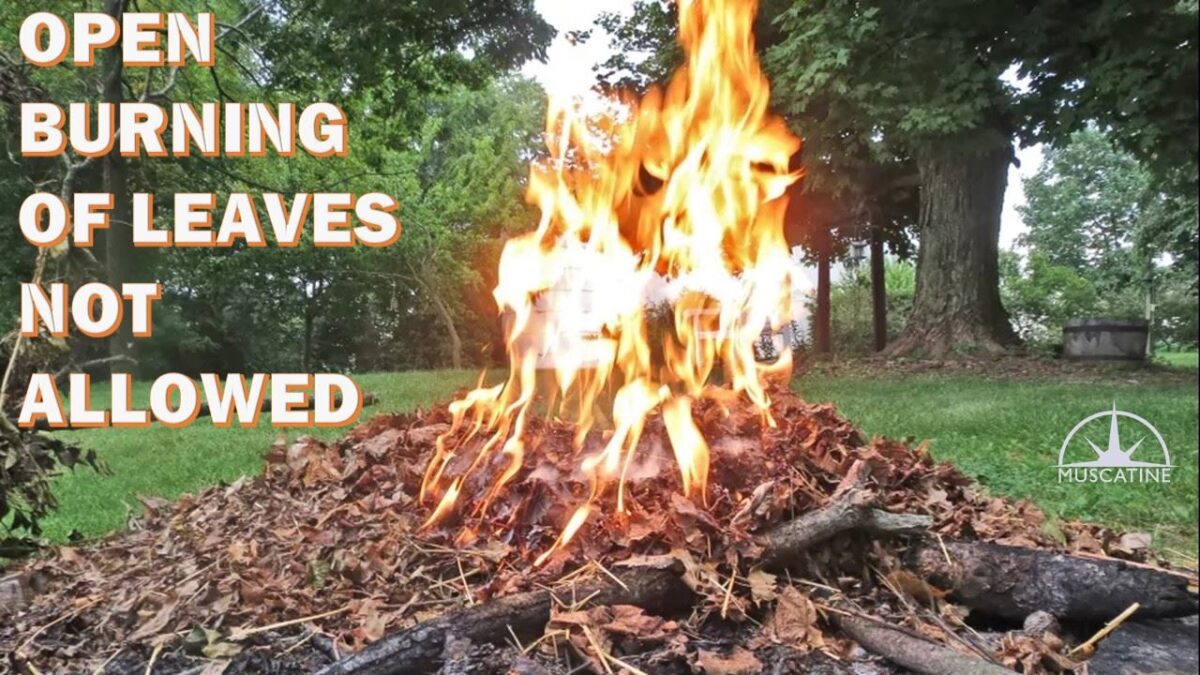
Reminder – open burning of leaves is not permitted

MUSCATINE, Iowa –Weather and holiday closures along with an abnormally large number of leaves on the ground have created the not-ideal situation for the City of Muscatine Department of Public Works (DPW) of being behind in leaf collection efforts.

The delay in moving from zone to zone has prompted some residents to ponder if they should just burn their leaves instead of waiting for the leaf vacuum trucks to come around.

The simple answer is … DON’T. It is against the City Code of Muscatine and you could be fined.

“We have not allowed the burning of leaves for as long as I can remember,” Assistant Fire Chief Mike Hartman, who also serves as Muscatine’s Fire Marshal, said. “So, this has been a city ordinance for well over 25 years. When I came on the job the answer to my questions about burning leaves focused on the health/smoke concern and the potential for fires. I believe those are still two critical arguments for banning the burning of leaves.”

According to the City Code of Muscatine there will be no open burning within the corporate City limits without a permit having been issued by a representative of the Fire Department or by special exception of City Council. Section 15-5-2 (D) states that individuals who have property of one acre or more can be issued permits to burn landscape waste that commonly consists of leaves, organic matter, and brush and trees gathered from that property. 

The reasoning for one acre or more is that these properties are large enough for individuals to locate their burn piles where they do not pose a risk to other structures whether on the individual’s property or a neighbor’s property. Open burning can only be done between 7 a.m. and 9 p.m. on the days stipulated on the permit. Section 15-5-5 contains other Open Burning Restrictions.

A Fire Department representative will attempt to ensure the fire poses no problem with relation to smoke obscuring roadways, creating a nuisance, or of the fire spreading beyond the control of the responsible individual before a permit is issued.

“With our present open burning ordinance (leaves not allowed to be burned) the most common reason for someone calling in an open burn is because of the smoke,” Hartman said. “The ordinance specifically authorizes our staff to require burning to be discontinued if the smoke is an issue – even if the citizen has a valid burn permit.”

Muscatine Fire Chief Jerry Ewers said his primary responsibility is the prevention of fires, therefore he fully supports the ban on opening burning.

“One of our primary concerns is that these fires tend to get out of control and spread to garages, fences, and other structures,” Ewers said.

Hartman noted that if you have watched a pile of leaves burn, you likely noticed how quickly and easily burning leaves can be swept up by a breeze. Fortunately, this material is not often a competent ignition source once it flies off, but there is potential.

The other primary concern is the health of the community.

“We interact with many people who have legitimate health issues and are medically impacted by smoke from burning wood,” Hartman said. “With our present ordinance we are able to balance the desire of one citizen to relax by a recreational fire with the personal safety concerns of those with medical conditions.”

“Within the last year we had 32 calls where someone was illegally burning – most of those were called in due to smoke,” Hartman said. “We also had six other calls where someone complained but since the person burning was following the rules, we allowed them to continue.”

So, what options are available to residents since burning leaves is banned by the City of Muscatine (and many other communities in our area including Davenport, Bettendorf, Iowa City, Clinton, Rock Island, and Moline).

The first option is to be patient. Public Works has three crews working extended hours to catch up and complete the second round of collection. A third and final round of collection will be undertaken if the weather holds.

“We have taken 304 leaf loads to the Compost Facility so far this fall,” Brian Stineman, Public Works Director, said. “Last year at this time we only had 178 leaf loads. We have every piece of equipment and every available staff member out working to complete our leaf collection efforts.”

Two other options available for residents include placing the leaves in a City of Muscatine yard waste bag to be picked up on the resident’s refuse collection day, or use the leaves as mulch for their gardens.

City of Muscatine yard waste bags are available at the Muscatine Transfer Station, HyVee stores, and at Fareway Grocery. Grass clippings, leaves, and garden waste can be placed in these bags and set next to the resident’s refuse bin on their collection day. The bags will be picked up by the Solid Waste Division and taken to the Muscatine Compost Facility.

Yard waste bags that have store brand names on them will not be picked up. However, residents of Muscatine and Fruitland can take these bags to the Compost Facility at their convenience.

The Compost Facility at the Transfer Station is scheduled to close for the season on December 11 but hours may be extended if leaf collection continues. The Compost Site will be open from 12-5 p.m. Sunday through Friday and from 9 a.m-5 p.m. on Saturdays.

Iowa DNR encourages three ways to handle fall leaves –

Fall leaves are beautiful – until they pile up in your yard. Don’t send those precious nutrients up in smoke. Instead, put those nuisance leaf piles to good use. Leaves, small branches and other landscape materials can nourish your lawn, garden or community.

It’s easy: 

  1. Compost. Composting leaves and food scraps is a great way to turn this waste into garden nutrients. A good compost mix needs both carbon (dead or dry leaves) and nitrogen (green materials like food scraps and grass clippings). Many types and sizes of compost containers are available. For tips on low-tech ways to compost, see a DNR tutorial.  
  2. Mulch. Your lawn will love you if you chop up and leave your leaves in place. Leaves are a free, natural fertilizer that enriches your soil with organic matter. You can use your regular lawn mower. Or, use a mulching lawn mower to shred and mix leaves and grass into your yard.  
  3. Bag it. If you have too many leaves or branches to compost, you can bag the leaves and tie up the branches to be collected or have a drop-off at the Muscatine Compost Facility. The upside is that anyone can pick up composted materials for their yards or gardens from the Compost Facility.
  1. Yard waste is collected on a residents refuse collection day but only in bags with the City of Muscatine logo on them. (See GUIDELINES). 
  2. Yard Waste in any paper bag along with tree limbs and other trimmings can be taken to the Compost Facility during normal hours operation. 
  3. Residents of Muscatine and Fruitland can drop off yard waste free of change with proof of residency. A small fee is charged for non-residents.

For some, burning leaves seems to capture the nostalgic smell of autumn. But breathing leaf smoke pulls pollutants such as carbon monoxide, soot and toxic chemicals into your lungs. While it may smell good, smoke is especially harmful to children, the elderly, and those with respiratory or heart problems. Turning leaves into nutrients is the healthy way to protect your and your neighbor’s lungs.

Categories
City of Muscatine Press Releases

Free family events are planned this June at the Art Center

MUSCATINE, Iowa – The winter months are gone, the weather is changing, and it is almost summer. The Muscatine Art Center is delighted to invite families for a couple of FREE outdoor family events to celebrate spring’s awakening of nature and the promise of a summer filled with fun in the great outdoors.

“We are really excited to host these family events coming up in June,” Katy Loos, Muscatine Art Center Program Coordinator, said. “The Eulenspiegel Puppet Theatre has always been a great partner, and we are excited to have them back for this bilingual performance. We are also happy to offer another family picnic on our beautiful grounds. It is always a pleasure to see Muscatine families come out for a visit.” 

To open the June festivities, the Eulenspiegel Puppet Theatre Company from West Liberty will perform Uncle Rabbit’s Adventures (Las Aventuras de Tio Conejo) at 12:30 p.m. on June 10Uncle Rabbit’s Adventures combines two trickster tales into one delightful story celebrating the victory of the small but clever rabbit over his larger, wealthier, and more powerful adversary. This story is presented bilingually and features live music.

This free performance will be held in the Brad Burns Performing Arts Park (on Mulberry Avenue on the north side of the Muscatine Art Center). Attendees are encouraged to bring their lunch to enjoy before the performance. In case of inclement weather, the performance will be held in the Music Room. Registration is not required. The performance is part of a multi-cultural series funded by a grant from the Mary Jo and Richard Stanley Human Conditions Fund. 

Returning this year to the grounds of the Muscatine Art Center is a family favorite … the Family Picnic. The picnic will be held from 11 a.m. to 1 p.m. on June 24. Families are encouraged to bring lawn chairs, blankets, and a picnic lunch, and spread out on the Muscatine Art Center lawn. Free ice cream, sponsored by Kent Corporation, will be available. 

Families will also experience the sights and sounds of the historic Tangley calliope, and kids are invited to paint the windows of the outdoor courtyard. “Take & Make” kits will be available to complete at home. 

In the studio, attendees can participate in creating parts of the “Tree of Acknowledgement”, a community-based sculpture from artist Nancy Judd, commissioned by the Stanley Center for Peace and Security. Read more about the project at www.muscatineartcenter.org/happenings/events/family-picnic. Registration is not required. 

Uncle Rabbit Adventures (JPG)For a full schedule of events, programs, and classes for the month of June and beyond, visit www.muscatineartcenter.org or visit the Muscatine Art Center Facebook page.

The Muscatine Art Center is located at 1314 Mulberry Avenue in Muscatine, Iowa. Hours are Tuesday, Wednesday, and Friday from 10:00 a.m. to 5:00 p.m., Thursdays from 10:00 a.m. to 7:00 p.m., and Saturday and Sunday from 1:00 to 5:00 p.m. Admission is free. Donations are appreciated. Visit muscatineartcenter.org for more information about programs and events. Please contact Katy Loos, Program Coordinator, with any questions about our upcoming programs at 563-263-8282 or by email at kloos@muscatineiowa.gov. 

Categories
City of Muscatine Press Releases

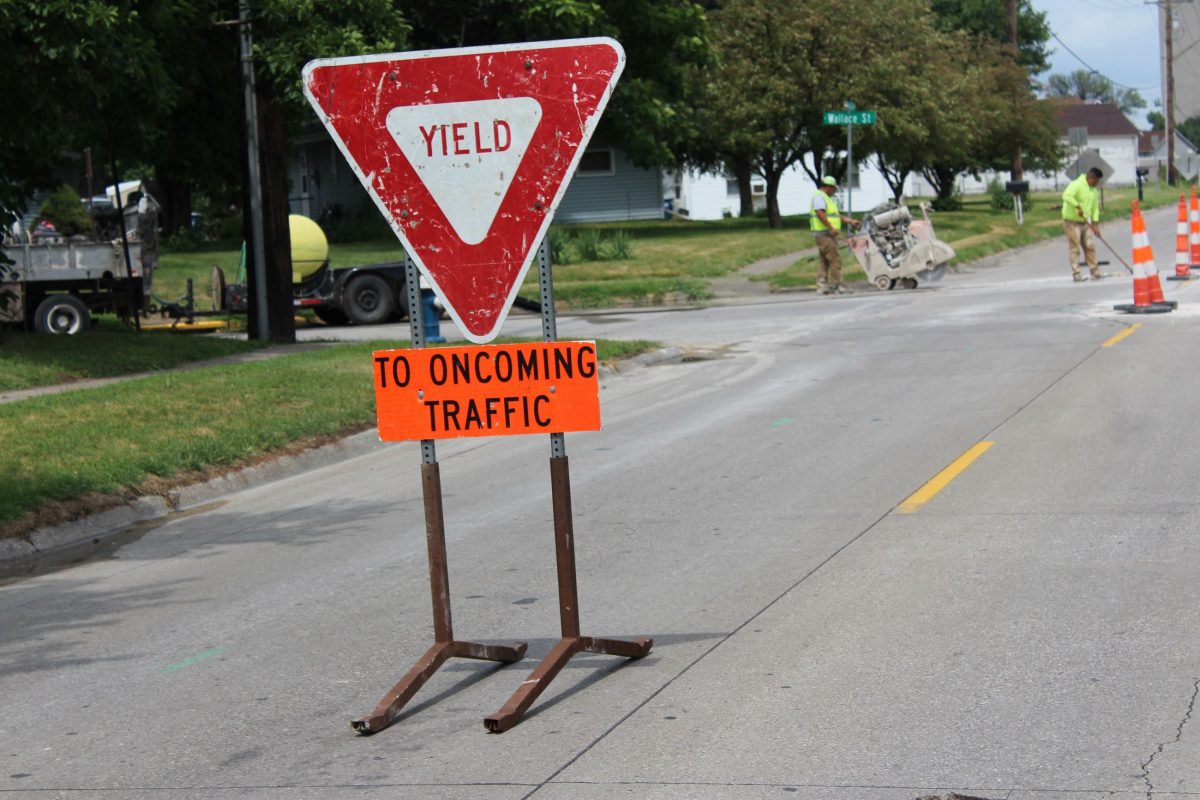
Traffic Alert: Full Depth Patching project begins March 21

MUSCATINE, Iowa – As warm weather returns so does construction work in Muscatine with the 2022 Full Depth Patching Program and work on the Iowa Department of Transportation (DOT) punch list for the Park Avenue 4-to-3 Lane Conversion Project set to begin next week. Lane restrictions will be in place as these projects continue.


Heuer Construction, Inc., was awarded the 2022 Full Depth Patching contract and will begin on Monday (March 21) with an emergency repair on Hershey Avenue near the northbound ramps for Highway 61. Once that repair has been completed, Heuer will move to 1608 Cedar Street (near the intersection with Parham).


Also included as part of the 2022 contract is Isett Avenue (Bidwell Road to the Heinz pedestrian entrance), Houser Street (Fulliam Avenue to Dawson Street), Stewart Road (Oregon Avenue to Wallace Street), Robin Road (Sunrise Circle east to end of the concrete), Frontage Road (Cleveland Street to Ford Avenue), and Devitt Avenue (Ridgewood Avenue to Pinefield Street). Additional emergency repairs may be added if time and money remain in the contract.


Heuer Construction, Inc., will also be closing down one outside lane of Park Avenue from Washington to Colorado Tuesday (March 22) to work on the DOT punch list.


Additional traffic notes:


  • Musser Street is closed from the intersection with Wisconsin and Baker to the Grandview intersection as the east side of the Musser-Grandview intersection is prepared for paving.
  • West 8th Street is closed to through traffic from Broadway to Lucas for landscaping and finishing work as part of the West Hill Sanitary & Storm Sewer Separation Project. This section of West 8th will remain closed to through traffic as sewer work begins in the Lucas and West 8th intersection. That work is tentatively scheduled to start March 28. More details on the intersection closure will be announced next week.


Drivers are reminded to slow down and use caution when travelling through the construction zone, obey traffic control devices, and be aware of workers. Use an alternate route if possible.


For more information on City of Muscatine construction projects click on CONSTRUCTION to visit the Department of Public Works Construction Projects page.


If you have a comment or concern, please email feedback@muscatineiowa.gov or pwrequest@muscatineiowa.gov. A staff member will respond within 24 hours.

Categories
City of Muscatine Press Releases

Preventing residential fires as the weather turns colder

MUSCATINE, Iowa – Many people turn to additional heating equipment as the weather turns colder, and the potential for property and/or personal loss due to fire also increases unless adequate precautions are taken.


No one ever wants a fire but fires do happen, and the weather compounds the loss during this time of year.


A January 2021 report by the National Fire Prevention Association states that space heaters were most often responsible for home heating equipment fires, accounting for more than two in five fires as well as the vast majority of deaths (31 percent) and injuries (80 percent) in home fires caused by heating equipment.


Fireplaces or chimneys were involved in approximately three in 10 fires caused by heating equipment, but these were mostly confined fires that did not extend beyond the chimney. Other leading types of heating equipment involved in home heating equipment fires included central heating systems and water heats (one in 10 heating equipment fires).


Victims of fires have to deal with being displaced by the fire, deal with the cold during the fire, and deal with everything freezing up after the fire.


“The water we use turns to ice very quickly and can build up making it hard to recover items that were in the fire,” Mike Hartman, Assistant Fire Chief and Muscatine Fire Marshal, said. “The loss of utilities for the larger fires means that anything left in the home will freeze up including pipes, plumbing, appliances, and personal items.”


Loss can be averted or limited by following a few safety tips during these cold winter months.


When using a space heater:


  • Purchase a heater with the seal of a qualified testing laboratory (i.e., UL listed and labeled).Preventing House Fires 03 (JPG)
  • Choose a heater with a thermostat and overheat protection.
  • Make sure heater has an auto shut-off to turn the heater off if it tips over.
  • Place the heater on a solid, flat surface.
  • Keep space heaters out of the way of foot traffic and NEVER brock an exit.
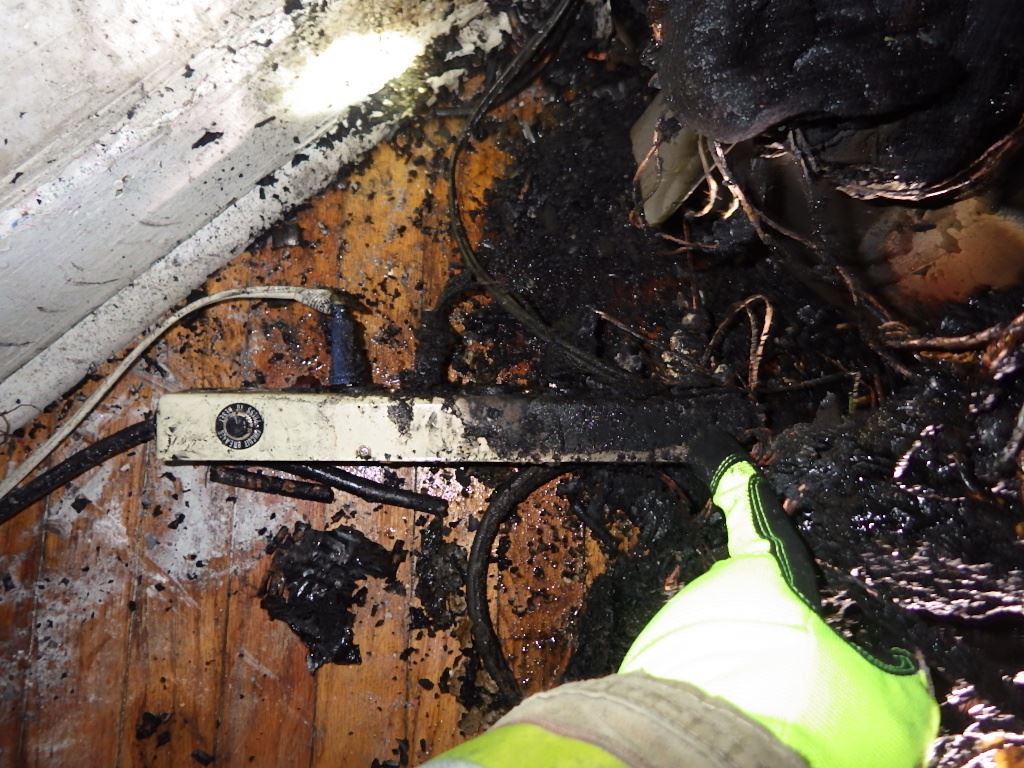
  • Plug the heater directly into the wall outlet. Never use an extension cord or power strips.
  • Keep anything that can burn at least three feet away from heating equipment.
  • Maintain a three-foot kid-free zone around home fireplaces and space heaters.
  • Remember to turn portable heaters off when leaving a room or going to bed.


Other safety tips:


  • Never use your oven to heat your home.
  • Have a qualified professional install stationary space heating equipment, water heaters, and central heating equipment according to local codes and manufacturer’s instructions.
  • Have heating equipment and chimneys inspected and cleaned every year by a qualified professional.
  • Always use the appropriate type of fuel, as specified by the manufacturer, for fuel-burning space heaters.
  • Ensure that the fireplace has a sturdy screen to stop embers from flying into the room.
  • Make sure that ashes are cool before placing the in a bin for removal.
  • Dispose of ashes in a safe area outdoors and away from any combustible material.